Community Interest
Growing Change, One Garden at a Time
How the Green Heart Project is nourishing students, schools, and communities across Charleston County
In South Carolina, roughly 53% of children live in households struggling to make ends meet. Parents may juggle multiple jobs, or grandparents may be raising children on fixed incomes. Numerous communities across our region lack full-service grocery stores for miles, leaving families without nutritious fruits and vegetables. Too often, children go hungry. Unfortunately, these challenges don’t stop at the dinner table; they can ripple into classrooms as social, behavioral, and learning struggles.
It was within this reality that restaurateur Karalee Nielsen Fallert founded the Green Heart Project in 2009, beginning with a single urban garden at Mitchell Elementary School in downtown Charleston. Seventeen years later, that seed has grown into a thriving network of school gardens across ten Charleston County school campuses, making a huge impact on our community.
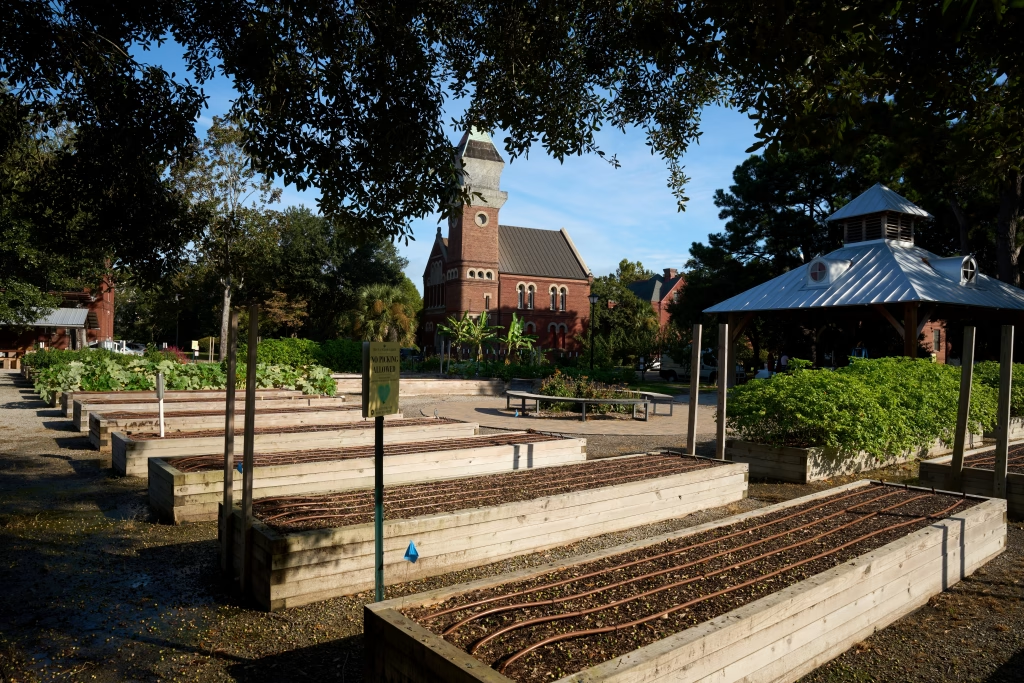
Operating on a “hub and spoke” framework—with thel Urban Farm at Enston Home serving as a shared “home garden” for several area schools, alongside individual school gardens throughout the county—the organization blends education and access in meaningful ways. As Executive Director Jesse Blom explains, “the Green Heart Project uses school gardens and urban farms to educate students through hands-on learning experiences and to cultivate community through the shared joy of growing and eating food.”
“We love visitors,” he adds. The Urban Farm at Enston Home (900 King Street) is open to the public. “On Thursday afternoons during the harvest season, we host an on-site produce stand where you can buy the fruits and vegetables we grow at the farm.”
Students in school gardens build social and emotional skills like collaboration and teamwork while engaging in academic lessons aligned with South Carolina grade-level curricula. They also learn to be global citizens—growing their own food and understanding the connection between healthy food and healthy bodies.
The program is beloved by educators. “Green Heart’s contribution to student engagement, learning, and well-being continues to have a large impact,” says Melissa Wingard, a teacher at St. Andrews School for Math and Science. “Beyond the learning that takes place, we see kids try nutritious foods they’ve grown. These experiences cultivate a valuable life skill (growing your own food) and exposure to eating healthy foods on top of the learning how it takes place.”
Want to get involved? Visit the Green Heart Project website to explore volunteer opportunities, or stop by the farm stand during the spring and fall harvest seasons. However you participate, you’ll support unique, hands-on learning experiences that nourish both students and the Lowcountry community.
Want to discover more local? Follow Fig Magazine on Facebook and Instagram for inspiration.